GCLogo

Curiously Creative

Town Restaurant Brand Identity & Menu Design

I developed this comprehensive menu layout and brand identity system for my COM-232 course at Southern New Hampshire University. The project challenged me to design a cohesive multi-page print asset for "Fu Town," a high-end restaurant specializing in authentic Chinese cuisine. The goal was to balance rich cultural symbolism with clean, modern editorial typography to appeal to a sophisticated fine-dining market.
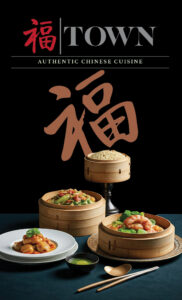
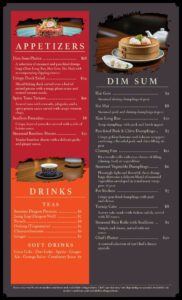
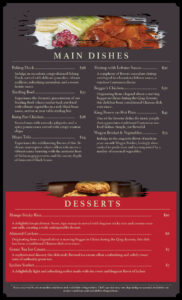
Front Page

Page 1

Page 2

Back Page

Design Strategy & Visual Language

The visual direction bridges traditional heritage and contemporary minimalism. By utilizing a high-contrast palette and organic textures, the layout establishes an elegant, immersive dining atmosphere before the meal even begins.

  • Thematic Color Palette: The design relies on a bold trinity of deep charcoal black, rich crimson red, and burnt orange. Black provides a dramatic, high-end backdrop, while the reds and oranges inject warmth, energy, and a nod to traditional color symbolism associated with prosperity and joy.
  • Minimalist Cover Identity: The cover elements (Front Page and Back Page) feature a striking application of the "Fu" (福) character—representing good fortune and blessings. Its textured, calligraphic form contrasts beautifully against crisp, modern sans-serif and serif type combinations.
  • Organic Image Masking: High-resolution food photography (such as the dim sum and Peking duck showcases) is integrated using dynamic, brush-stroke masks. This treatment breaks rigid grid boundaries, echoing classical ink-wash painting techniques while focusing the diner’s eye on signature dishes.
  • Typographic Hierarchy & Layout: The interior pages (Page 1 and 2) utilize a split-column design. Left-hand accent blocks cleanly categorize secondary elements like drinks and desserts, while elegant serif headers and classic dot leaders ensure flawless readability across diverse menu descriptions.

Technical Skills Applied

  • Print Media Layout & Grid Systems: Structuring multi-page configurations with intentional margins and readable typography.
  • Cultural Content Integration: Respectfully adapting traditional motifs—like the Fu character and ink-brush textures-into modern corporate design.
  • Advanced Compositing & Masking: Merging photographic assets seamlessly with textured graphic backdrops.
  • Information Architecture: Managing extensive text and pricing tiers to ensure intuitive navigation for the consumer.
Scroll to Top